
Pushing your boundaries at a world-class gym in Canggu or paddling out into the surf should elevate your fitness, not leave you with a debilitating joint issue. When lifting your arm transitions into a sharp, catching ache, assuming it is simple post-workout strain can delay essential healing. Learning to differentiate soft-tissue friction from a severe structural injury is vital to protecting your joint health through targeted physiotherapy.
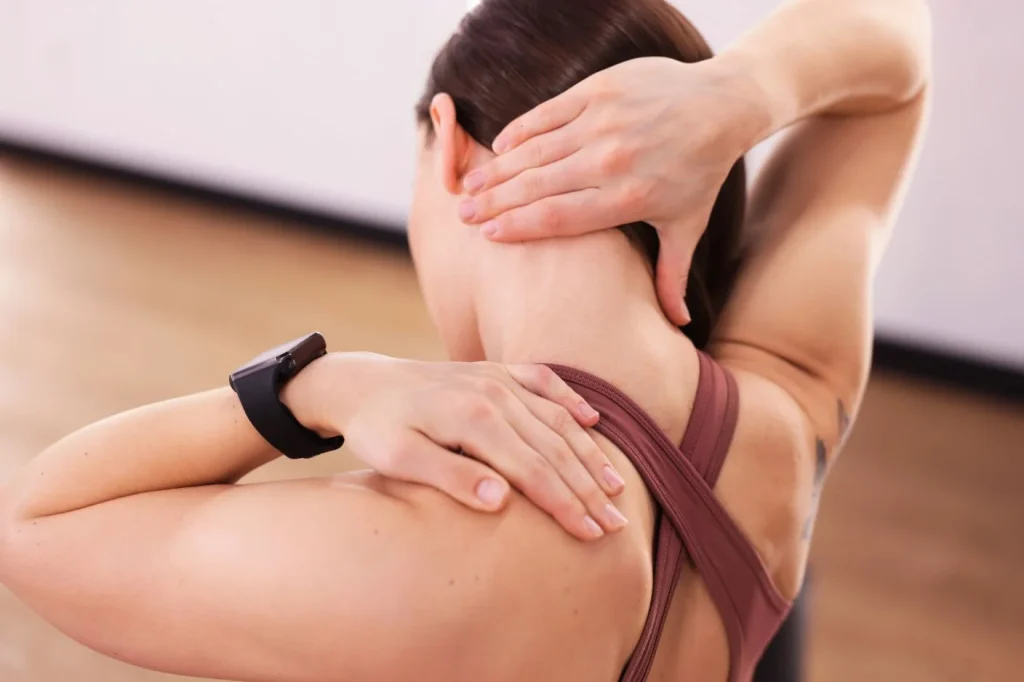
The Mechanics of Shoulder Overuse
As the body’s most mobile joint, the shoulder relies on the rotator cuff for stability. Repetitive movements like overhead lifting or paddling can compress this joint space, causing friction that may eventually lead to structural micro-tears.
Distinguishing between general soreness and true shoulder pathology is critical, as specialized care is required for structural issues. These specific mechanical restrictions cannot be resolved by standard recovery strategies typically used for simple overworked muscles.
Differentiating Shoulder Impingement Symptoms from a Tear
Identifying the precise mechanical triggers of your discomfort is crucial before initiating any stretching or training regimen. A careful clinical evaluation reveals distinct symptomatic contrasts between an active subacromial compression and a true structural tear:
- Pain Arc Presentation: Impingement typically causes a sharp, catching ache when your arm is raised between a 60 and 120-degree arc, whereas a tear causes persistent pain regardless of the angle.
- Localized Muscle Weakness: A classic rotator cuff tear manifests as an inability to lift or hold your arm horizontally against slight resistance, whereas impingement preserves muscular strength despite the presence of inflammatory pain.
- Nocturnal Discomfort Levels: Both conditions trigger a deep ache, but a structural tear makes sleeping directly on the affected shoulder almost impossible, frequently waking you up with a throbbing sensation.
According to the Mayo Clinic, identifying whether your lifting pain includes structural drop-arm weakness can help distinguish minor soft-tissue compression from a significant tendon tear.
Immediate Inloading Protocols for Travelers
When an acute bout of shoulder pain strikes while you are in Bali, stabilizing the joint should be your immediate priority to de-load the surrounding musculoskeletal tissues:
- Restrict Overhead Movements: Avoid any movements that force your elbow above shoulder level, as this position drives the humerus directly into the irritated subacromial space.
- Apply Cryotherapy: Place a cold pack wrapped in a thin towel on the anterior joint wall for 15 minutes every three hours to down-regulate localized swelling.
- Maintain Controlled Mobility: Rest is crucial during an acute flare-up, but avoid complete joint immobilization to prevent secondary complications like frozen shoulder.
These dynamic modifications temporarily soothe nerve endings while you arrange a professional evaluation. This baseline is especially critical if your work includes structural stress fields linked to an uncorrected digital nomad posture or a tense scooter riding posture.
How Physiotherapy Resolves Shoulder Dysfunction
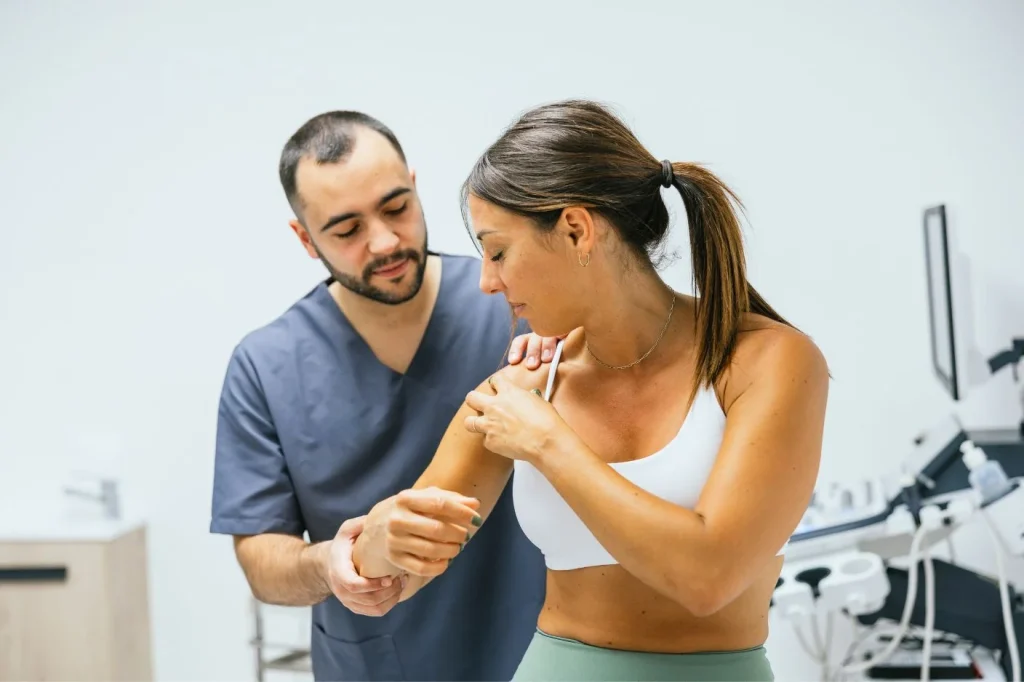
Resolving deep tendon entrapment requires mechanical realignment that goes beyond simple rest or temporary soft-tissue relaxation. Our specialized clinical approach focuses on restoring natural biomechanics through target-specific therapeutic modalities:
- Manual Subacromial Decompression: Applying specific clinical joint glides to manually widen the internal space, removing immediate mechanical pressure from the inflamed tendons.
- Scapular Rhythm Correction: Designing functional movement programs to retrain your shoulder blade stabilizers, ensuring the bone clears the subacromial space safely during overhead lifting.
- Targeted Rotator Cuff Strengthening: Prescribing precise eccentric loading exercises to stimulate healthy collagen repair within the damaged tendon fibers.
- Clinical Mobilization Plan: Booking a professional physiotherapy in Bali session allows our medical team to target chronic structural shortenings and ensure a safe, rapid return to your passions.
Conclusion
Continuing to push through shoulder friction will inevitably turn a manageable impingement into a complete tendon tear. If your shoulder discomfort restricts your daily movement or prevents you from training safely, contact Hydro Medical to get your joint function expertly evaluated. Our physical therapists are ready to help you recover your active performance quickly.
STOP PUSHING THROUGH SHOULDER FRICTION.
Continuing your overhead training with an injured joint can trigger a permanent tear. Let our specialized sports therapists safely restore your mechanics.
Frequently Asked Questions (FAQ)
What is the main cause of shoulder impingement during workouts?
Repetitive overhead movements, poor scapular stabilization, and lifting heavy weights without correct form narrow the joint space and pinch internal tendons.
How do I know if my rotator cuff is torn or just inflamed?
If you experience significant, localized muscle weakness—such as being unable to hold your arm out to the side against minimal pressure—it points toward a structural tear.
Can I still surf with a mild shoulder impingement?
It is strongly discouraged. Paddling actively worsens tendon friction, which can accelerate tissue breakdown and turn a minor impingement into a severe tear.
Why does my shoulder pain get significantly worse at night?
When lying down, the fluid dynamics within the joint space shift, increasing localized pressure on inflamed bursae and tendons, especially when rolling onto that side.
Does a shoulder injury require a mandatory X-ray or MRI?
Most initial diagnostics are safely managed through specific clinical physical testing; imaging is recommended if a total tear or bone spur is suspected.
How can clinical physiotherapy fix a compressed tendon?
We utilize manual joint mobilization to depress the humerus head, opening up the joint space while prescribing targeted exercises to re-educate your shoulder rhythm.
Can your medical team treat my shoulder pain directly at my Bali villa?
Yes, Hydro Medical provides dedicated home visit physiotherapy services across Bali, bringing professional clinical protocols straight to your doorstep.
Will wearing an arm sling help my rotator cuff recover faster?
Immobilizing the arm completely without a medical directive can lead to muscle wasting and dangerous joint stiffness, known as frozen shoulder.
How long does it take for shoulder impingement to heal with physiotherapy?
Mild impingements can achieve substantial pain relief within 2 to 3 weeks of targeted clinical therapy and custom motor training.
How can I schedule an emergency sports therapy evaluation?
You can secure a clinical evaluation slot immediately by messaging our advisory team via WhatsApp at +62 858-9988-8911.