
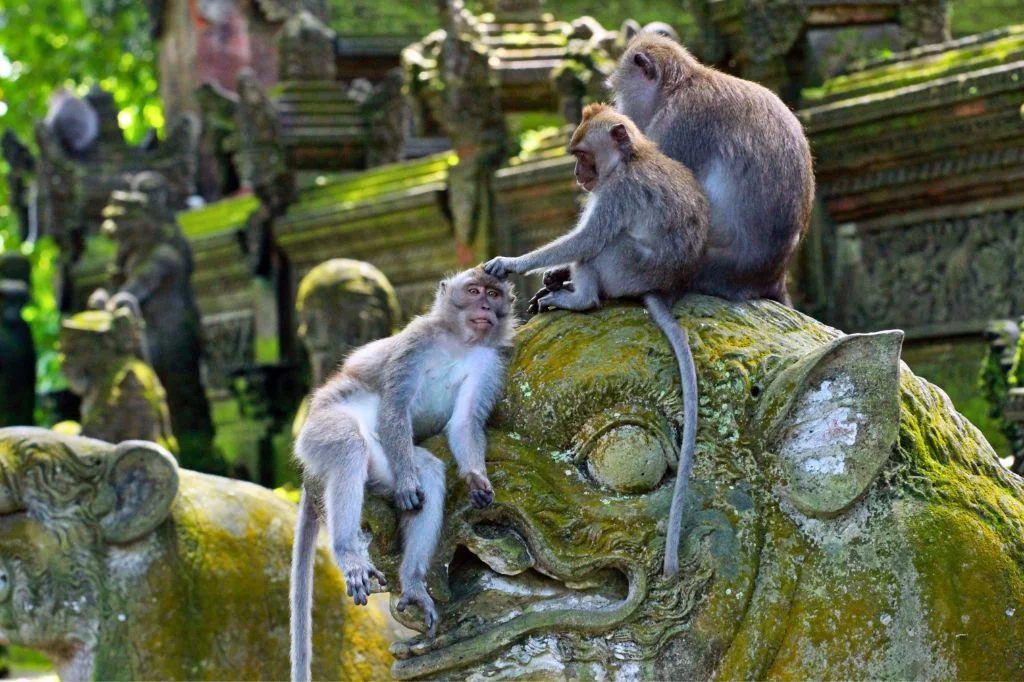
Visiting the Sacred Monkey Forest in Ubud or the cliffside temple of Uluwatu is a highlight for many travelers. However, the line between a fun photo opportunity and a medical emergency is thinner than most realize. While they look playful, macaques are wild animals, and monkey bites are one of the most frequent reasons tourists visit our emergency rooms. Understanding the rules of engagement is essential to keeping your day trip safe.
The Hidden Risks: Not Just a Nip
While dogs are often the primary concern regarding rabies in Bali, monkeys are mammals and potential vectors for the virus as well. Seeing how common rabies is in Bali reinforces why you cannot take a “wait and see” approach with these injuries.
Beyond the viral risk, a monkey bite introduces complex medical dangers:
- Rabies Transmission: A bite or scratch carries the same rabies risk as one from a street dog. Since monkeys groom each other, their nails can also transmit the virus through a scratch.
- Severe Bacterial Infection: The mouth of a macaque is a breeding ground for harmful bacteria. Deep puncture wounds have a high rate of secondary infection and can quickly become septic without professional cleaning.
- WHO Warning: According to the WHO fact sheet on animal bites, monkey bites account for a significant portion of animal injuries in travelers and require immediate medical attention.
The “Rules of Engagement” at Temples
To enjoy these sites safely, you must follow strict behavioral protocols. Monkeys are highly intelligent and opportunistic thieves. If you are traveling with kids to Bali, these rules are even more critical to ensure their safety:
- No Plastic Bags: The sound of crinkling plastic equals food to a monkey. Never bring plastic bags into the forest.
- Secure Your Items: Sunglasses, earrings, hats, and smartphones are prime targets. Keep loose items inside a zipped bag.
- Empty Your Pockets: Monkeys are clever enough to know that a bulge in your pocket might be peanuts.
- Don’t Smile: In primate language, showing teeth (even in a friendly smile) is a sign of aggression or a threat. Keep your expression neutral and mouth closed.
The “Monkey Selfie” Risk
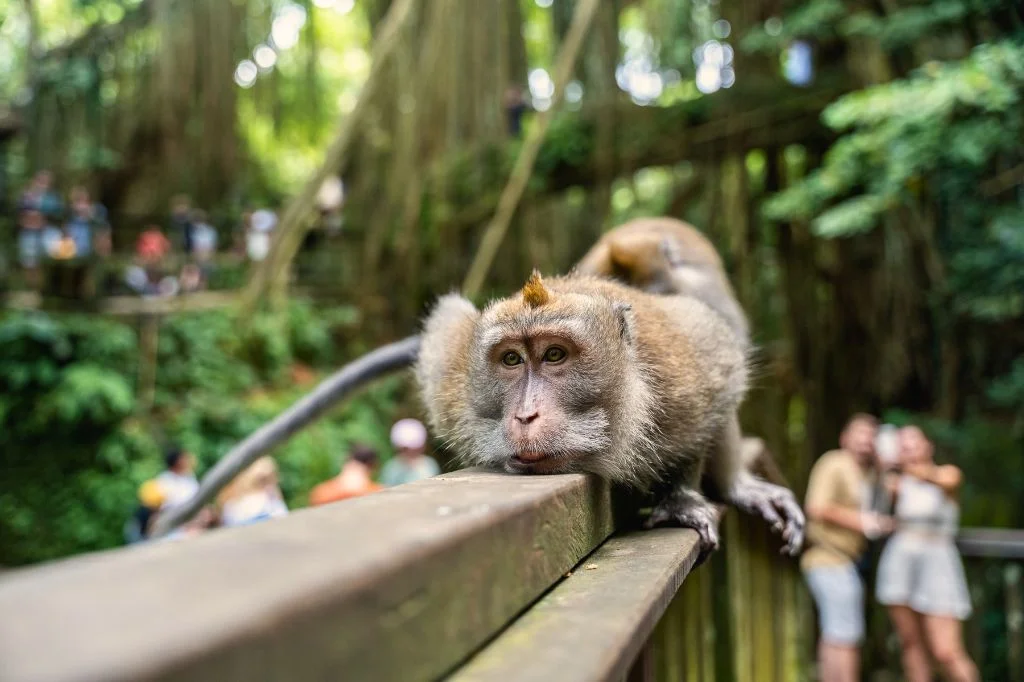
Social media has popularized the “monkey selfie,” where tourists entice monkeys to sit on their shoulders for a photo. From a medical perspective, this is a dangerous gamble. It places a wild animal’s teeth inches away from your face and neck. A bite to the face or neck is classified as a high-risk Category III exposure, which almost always requires rabies vaccination in Bali combined with expensive Immunoglobulin (HRIG) injections. It is much safer to take photos from a distance.
What to Do If a Monkey Jumps on You
If a monkey jumps onto your shoulder or backpack, your immediate reaction determines the outcome. The most important rule is to suppress your instinct to scream, wave your arms, or try to push it off, as this will trigger an aggressive attack.
Instead, follow these steps to de-escalate the situation:
- Stay Calm: Freezing or moving slowly signals that you are not a threat.
- Walk Away: Continue walking at a steady pace. The monkey will usually jump off once it realizes you do not have food.
- Drop the Object: If they grab an item you are holding, drop it immediately. Never play “tug-of-war” with a macaque; they are stronger than they look and will bite to win.
I Got Bitten. Now What?
If you are bitten or scratched, you must act fast. Do not brush it off as a minor injury. Perform the immediate steps after a bite: wash the wound vigorously with soap and running water for 15 minutes to reduce the viral load.
After washing, head immediately to a clinic. Monkey bites are often deep puncture wounds that require professional cleaning and a tetanus booster in addition to rabies protocols. Hydro Medical provides comprehensive animal bite wound care to ensure the wound heals without infection.
Conclusion
Bali’s temples and forests are magical places that deserve to be explored. By respecting the wildlife and keeping your distance, you can enjoy the experience without injury. However, accidents can happen. If you suffer a bite during your day trip to Ubud or Uluwatu, drive back to the main medical hubs. Hydro Medical Clinic is open 24/7 to provide transparently priced care, so you never have to worry about the unexpected rabies vaccine cost impacting your safety.
MONKEY BITE? ACT FAST.
Monkey bites carry high risks of infection and rabies. Don’t wait until you’re back home. Get treated immediately at Hydro Medical.
Frequently Asked Questions (FAQ)
Do monkeys in Bali have rabies?
Yes, they are mammals and can carry rabies. While managed populations are monitored, outbreaks can happen. Treat every bite as a potential exposure.
What happens if a monkey bites you in Bali?
You must wash the wound immediately for 15 minutes and seek medical help for Rabies Vaccination (PEP) and Tetanus shots.
Are the monkeys in Ubud Monkey Forest aggressive?
They are habituated to humans but can become aggressive if they smell food, see plastic bags, or feel threatened.
Can I get rabies from a monkey scratch?
Yes. Monkeys lick their hands and nails. A scratch that breaks the skin can transmit the virus just like a bite.
Is it safe to take a selfie with a monkey?
It is risky. Having a wild animal near your face/neck is dangerous. If they bite your face, it is a high-risk injury requiring expensive HRIG treatment.
Do I need a tetanus shot for a monkey bite?
Yes. Monkey mouths contain diverse bacteria. If your tetanus shot is not up to date (last 5-10 years), you will need a booster.
What should I do if a monkey steals my phone?
Do not fight them for it. Ask a local temple guard or ranger for help. They often trade fruit with the monkey to get the item back.
Why shouldn’t I smile at monkeys?
To a monkey, showing teeth is a sign of aggression or a threat. Keep your mouth closed and expression neutral.
Are Uluwatu monkeys more aggressive than Ubud?
Often, yes. Uluwatu monkeys are famous for stealing glasses and hats to ransom for food. Be extra vigilant there.
Where can I get treated for a monkey bite?
Hydro Medical clinics are experienced in treating monkey bites with thorough wound cleaning and rabies vaccination protocols.