
While intravenous hydration is a powerful tool for wellness, it is a medical procedure that must be approached with professional clinical oversight. Understanding the medical protocols behind IV therapy in Bali is essential for any traveler to ensure that a treatment designed to boost health does not interfere with underlying medical conditions. At our clinic, we prioritize patient screening to determine who is an ideal candidate for their own safety.

Common Medical Contraindications for IV Therapy
Intravenous treatments introduce fluids and high-dose nutrients directly into the circulatory system, which can place a temporary strain on certain organs. For the vast majority of people, this is a beneficial process, but for individuals with specific chronic conditions, it can be medically risky.
- Congestive Heart Failure (CHF): If the heart is unable to pump blood efficiently, a rapid influx of IV fluids can lead to fluid accumulation in the lungs.
- Chronic Kidney Disease (CKD): The kidneys filter excess vitamins and fluids; compromised function can lead to an inability to process an IV’s volume.
- Uncontrolled Hypertension: Severe high blood pressure must be stabilized before adding extra fluid volume to the vascular system.
- Pulmonary Edema: Any history of fluid in the lungs serves as a major contraindication for standard large-volume hydration.
Why a Pre-Drip Doctor Consultation is Non-Negotiable
The difference between a safe IV drip in Bali and a risky one often lies in the initial medical assessment. Every patient must undergo a consultation where a licensed physician reviews their medical history and checks vital signs, including blood pressure and heart rate.
This screening process is designed to catch undiagnosed issues that the patient might not be aware of. This ensures that the infusion rate and ingredients are perfectly calibrated to your current physical state before proceeding with any treatment.
Temporary Restrictions: When to Postpone Your Session
Sometimes, a contraindication is not a permanent “no,” but rather a “not right now.” Certain temporary factors require a different clinical approach:
- Undiagnosed High Fever: If you have a severe fever without a known cause, you should receive a full medical diagnosis to rule out serious infections first.
- Active Allergic Reactions: We postpone elective wellness drips if you are currently experiencing an acute allergic flare-up to avoid complicating your immune response.
- Pediatric Needs: While adults benefit from elective drips, small children usually require specialized pediatric settings rather than clinical wellness infusions.
Identifying Sensitivities to Specific Vitamins
Even with healthy organs, individual sensitivities to certain micronutrients can occur. Medical screening is vital to determine if Bali IV drips are safe for your specific biological profile, especially when high doses of concentrated vitamins are involved. According to the World Health Organization (WHO), patient safety is maintained through strict adherence to clinical guidelines.
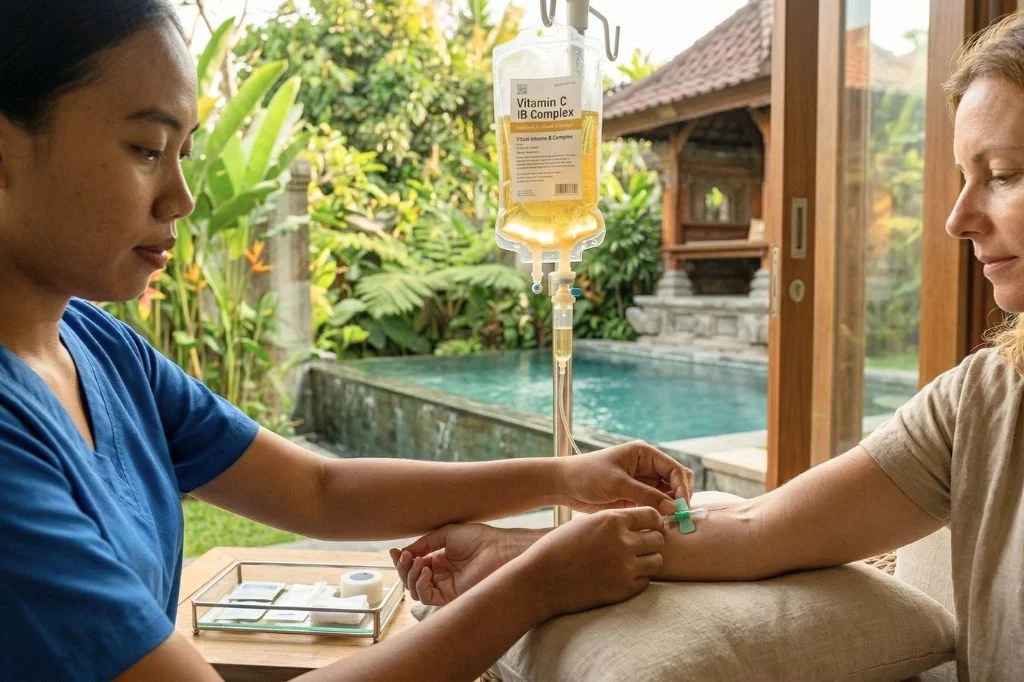
For those choosing an IV drip vs oral supplements, a doctor must first ensure that your system can handle the rapid influx. Licensed medical professionals are trained to monitor for rare signs of hypersensitivity to additives—such as specific preservatives—and have the emergency protocols ready to manage any reaction instantly.
Conclusion
Knowing when to modify a treatment is just as important as knowing why you have to get IV drip in Bali for your energy levels. A professional medical provider will always put your safety above a sale, ensuring that your health profile is fully compatible with the chosen infusion. By respecting these clinical boundaries, Hydro Medical ensures that your journey toward peak wellness remains both effective and entirely secure during your 2026 stay.
SAFETY STARTS WITH A CONSULTATION
Your health is unique. Ensure your IV treatment is perfectly safe by consulting with our licensed doctors before your infusion begins to guarantee a session tailored to your well-being.
Frequently Asked Questions (FAQ)
Who should avoid getting an IV drip in Bali?
Individuals with severe heart conditions, chronic kidney failure, or uncontrolled high blood pressure should avoid IV fluids unless cleared by a specialist.
Can I get an IV if I have high blood pressure?
It depends on the severity; a doctor will check your vitals at our clinic to decide if a fluid infusion is safe for you at that moment.
Are IV drips safe for pregnant women?
Certain IVs are safe for hydration during pregnancy, but they must be administered under strict medical guidance for specific issues like severe morning sickness.
What happens if someone with kidney issues gets an IV?
Can children get IV vitamin drips?
We generally prioritize oral hydration for children unless it is a medical emergency handled in a formal pediatric hospital setting.
Are there allergies associated with IV drips?
While rare, some people may be sensitive to specific preservatives or high doses of certain vitamins like Vitamin C or B-complex.
Why do I need a doctor’s consultation for a simple vitamin drip?
A consultation ensures the drip won’t interfere with your current medications or worsen an underlying, perhaps undiagnosed, health issue.
Can I get an IV if I am currently taking prescription medication?
Most medications are fine, but you must disclose them during your consultation to avoid any potential chemical interactions.
Is an IV safe if I have a fever?
If the fever is from dehydration or a mild cold, an IV is very helpful. However, severe or undiagnosed fevers require a full medical diagnosis first.
What is the risk of “fluid overload”?
Fluid overload occurs when too much fluid is given too fast; professional doctors prevent this by strictly monitoring and adjusting the infusion rate.