
If you’ve spent the last few days sweating through Bali’s heat and humidity and now have a cluster of small, itchy red bumps on your neck, waistband, or wherever your clothes sit tightest, you’ve likely found the most common rash tourists get here: heat rash, also called prickly heat.
It’s one of six causes covered in our broader guide to Bali rash, but on its own it’s usually more uncomfortable than concerning — here’s what it looks like, why Bali’s climate makes it so common, and how to clear it up quickly.
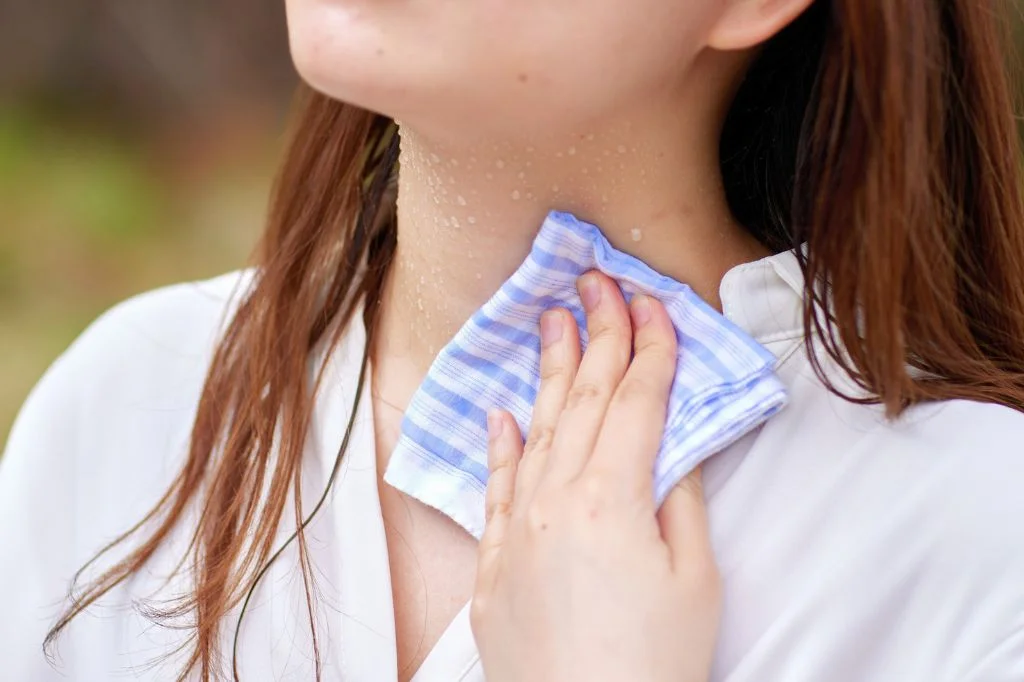
What Heat Rash Actually Looks Like
Heat rash shows up as tiny red bumps, or sometimes small clear or white blisters, usually appearing in clusters rather than as one continuous patch. It favors areas where sweat gets trapped against skin — the waistband, bra line, neck, elbow creases, and other skin folds. Along with the bumps, most people notice a prickling, stinging, or itchy sensation, which is exactly where the nickname “prickly heat” comes from.
Why Bali’s Climate Makes It So Common
Heat rash happens when sweat ducts get blocked and sweat leaks into the surrounding skin instead of evaporating normally. Bali’s combination of high heat and humidity means you sweat more, and that sweat evaporates more slowly — exactly the environment heat rash needs to develop.
Certain travel habits make it worse: wearing a scooter helmet for long rides, spending hours at the beach in fitted clothing, or sleeping under a fan instead of air conditioning all trap heat and moisture against your skin for extended periods.
Heat Rash vs. Other Bali Rashes
Because Bali rash can mean several different things, it helps to know what sets heat rash apart. Unlike tinea versicolor, which appears as pale or discolored patches rather than bumps, heat rash is raised and red. Unlike contact dermatitis, which usually shows up only where a specific product touched your skin, heat rash tends to appear wherever sweat has been trapped. And unlike insect bites, which cluster in one small area, heat rash can spread across several sweaty regions at once. If you’re not sure which one you’re dealing with, our full breakdown of the six most common causes can help you narrow it down.
How to Treat Heat Rash at Home
Most heat rash responds well to simply cooling the skin down:
- Move into air conditioning or shade as soon as possible
- Wear loose, breathable clothing (natural fabrics over synthetic)
- Pat skin dry rather than rubbing after sweating or swimming
- Avoid heavy creams, oils, or thick sunscreen on affected areas, since they can block pores further
- Resist scratching, even though it’s tempting
With these changes, mild heat rash usually clears within a day or two.
When to See a Dermatologist Instead of Waiting It Out
A short trial of basic care is reasonable, but it’s time to have a dermatologist look at it if:
- There’s no improvement after 2–3 days
- The rash is getting more painful or swollen
- You notice pus, warmth, or increasing tenderness
- You have a fever alongside the rash
- The same rash comes back on every trip to Bali
Hydro Medical offers same-day dermatologist appointments across Canggu, Seminyak, and Kuta, so a persistent rash doesn’t have to cost you a day of your trip.
How Hydro Medical Treats Persistent or Infected Heat Rash

When heat rash doesn’t clear up on its own, or looks like it might be infected, Hydro Medical‘s board-certified dermatologist can confirm what’s actually going on rather than you guessing. This usually means a quick visual exam to rule out a secondary infection or a different cause entirely, since a handful of tropical skin conditions can look similar in the early stages.
If it has become infected, treatment may go beyond basic anti-itch care — occasionally a short course of antibiotics or a stronger topical treatment, prescribed only if the exam supports it. Every consultation is private, and our team is fluent in English, so there’s no language barrier standing between you and a clear answer.
Frequently Asked Questions (FAQ)
What does heat rash look like?
Heat rash usually shows up as tiny red bumps or small clear or white blisters, often clustered where sweat gets trapped — the neck, waistband, bra line, elbow creases, or other skin folds. It often comes with a prickling or stinging feeling, which is where the name “prickly heat” comes from.
Is heat rash the same as an allergic reaction?
No. Heat rash is caused by blocked sweat ducts from heat and humidity, not by an allergen. An allergic reaction is usually tied to a specific product or exposure and tends to appear only where that product touched your skin, rather than spreading across sweaty areas generally.
How long does heat rash take to go away?
Mild heat rash often improves within 1–2 days once the skin is cooled down and kept dry. If it hasn’t improved after 2–3 days, or keeps getting worse, it’s worth having a dermatologist take a look rather than continuing to wait.
Can I prevent heat rash in Bali’s humidity?
Loose, breathable clothing, staying in air conditioning or shade during the hottest parts of the day, drying off promptly after sweating or swimming, and avoiding heavy lotions that can block pores all reduce the chances of heat rash flaring up.
Does heat rash need medical treatment or will it heal on its own?
Most heat rash heals on its own once the skin cools down and stays dry — no prescription is needed. Medical treatment becomes relevant if it doesn’t improve after a few days, keeps recurring, or shows signs of a secondary infection.
Can heat rash get infected?
Yes, though it’s not common. Scratching irritated skin can break it open and allow bacteria in, leading to increased redness, warmth, swelling, or pus. That’s a sign to have it checked rather than continue treating it as simple heat rash.
Is heat rash contagious?
No. Heat rash is your own skin’s reaction to blocked sweat ducts, not an infection, so it cannot spread to other people.
What’s the difference between heat rash and tinea versicolor?
Heat rash appears as small red bumps that flare with heat and sweating and usually clear within a couple of days. Tinea versicolor looks different — pale or discolored round patches, often on the back or chest, caused by a yeast overgrowth — and it doesn’t resolve on its own the way heat rash does.
Can babies or children get heat rash more easily in Bali?
Yes, children’s sweat glands are less developed, which can make them more prone to heat rash in hot, humid conditions. Keeping them cool, dressed lightly, and out of direct heat during peak hours helps, and it’s worth having a doctor check any rash on a young child that doesn’t settle quickly.
When should I see a dermatologist for heat rash instead of waiting it out?
See a dermatologist if the rash hasn’t improved after 2–3 days of basic care, is spreading or worsening, shows pus or increasing warmth, comes with a fever, or keeps recurring on every trip to Bali — these suggest something beyond simple heat rash.
Heat rash is uncomfortable, but it’s rarely something to worry about — and if it doesn’t settle on its own, a quick dermatologist visit is usually all it takes. Hydro Medical’s dermatologists are available across Canggu, Seminyak, and Kuta for private, same-day consultations.