
You thought your holiday flu was clearing up, but suddenly a sharp, deep pain strikes your ear, muffling your hearing like you are underwater. This is likely Otitis Media, a complication where nasal congestion travels to the ear, rather than an infection from pool water. Recognizing this distinction is vital because relief requires specific oral medications, not drops—a key aspect of proper ear and throat care while traveling.

How a Cold Travels to Your Ear (The Eustachian Tube)
Your ears and nose are physically connected by a small tunnel called the Eustachian tube. Its job is to drain fluid and equalize pressure. However, when you suffer from a common cold or flu, excessive mucus and inflammation can block this narrow tube.
Instead of draining normally, fluid gets trapped in the empty space behind the eardrum. This stagnant fluid becomes a breeding ground for bacteria or viruses, creating pressure that pushes against the eardrum from the inside. This pressure build-up is what causes that distinct, deep ache that often keeps patients awake at night.
Otitis Media vs. Swimmer’s Ear: Why Drops Don’t Work
Many patients mistakenly rush to the pharmacy to buy antibiotic ear drops, only to find they provide zero relief. The reason is simple geography.
A Swimmer’s Ear infection affects the skin in front of the eardrum (the outer canal), so drops can reach it easily. Otitis Media occurs behind the eardrum. Since your eardrum is a watertight barrier, drops applied externally cannot penetrate it to reach the source of the infection. Systemic treatment—usually oral medication—is required to clear the blockage and infection from within the body.
Key Symptoms to Watch
Distinguishing deep ear infection from other conditions helps you get the right help faster. Look for these signs:
- Deep, Throbbing Pain: Unlike the itchiness of fungal infections, this pain feels deep, sharp, or pulsing.
- Muffled Hearing: You may feel like you are wearing an earplug or listening through a wall. This sensation of a blocked ear due to wax or water occurs because the fluid behind the eardrum prevents it from vibrating correctly.
- Systemic Signs: Since this often follows a respiratory illness, you might still have a fever, headache, or runny nose.
- The “Pull Test”: This is the easiest way to check. If you pull on your earlobe and it hurts, it is likely Swimmer’s Ear. If pulling it causes no pain, but the ache remains deep inside your head, it is likely Otitis Media.
The Danger of Flying (Read Before You Board)
Traveling by plane with an active middle ear infection is dangerous. During takeoff and landing, the air pressure in the cabin changes rapidly. A healthy Eustachian tube opens to equalize this pressure (the “pop” you feel in your ears).
However, if your tube is blocked by infection and fluid, it cannot equalize. This results in a vacuum effect that causes excruciating pain and, in severe cases, can lead to barotrauma or a ruptured eardrum. If you have deep ear pain, strictly avoid flying until a doctor confirms your Eustachian tubes are clear enough to handle the pressure change.
Medical Treatment at Hydro Medical
At Hydro Medical, we treat the root cause of the pressure to prevent complications like ruptured eardrums. Our treatment protocol includes:
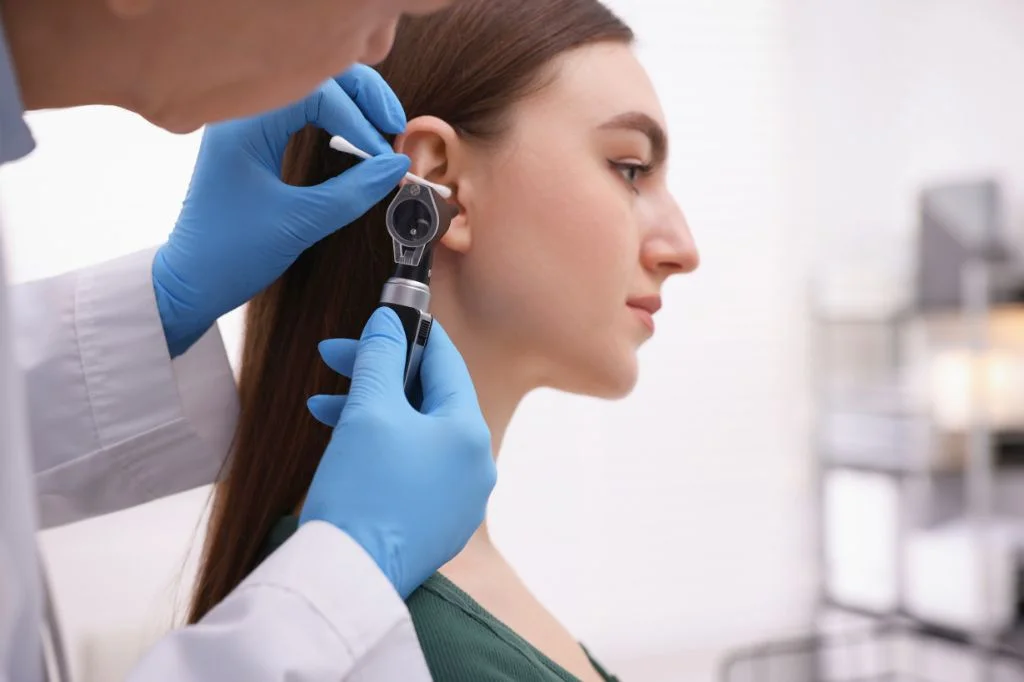
- Visual Diagnosis: We use an otoscope to examine the eardrum; if it appears bulging, inflamed, and red, the diagnosis is confirmed.
- Infection Control: If the cause is bacterial, we prescribe oral antibiotics to eliminate the infection systemically.
- Pressure Relief: We utilize decongestants or antihistamines to help open the blocked Eustachian tubes and allow the trapped fluid to drain naturally.
- Safety Assessment: For patients planning to fly, an ENT specialist consultation provides a safety clearance check to ensure your ears can handle cabin pressure.
Conclusion
A cold that turns into ear pain is a signal that your body needs medical support, not just rest. Ignoring it can lead to hearing issues or complications during travel. If your ear feels full and painful after a flu, visit Hydro Medical for a proper assessment and the right oral medication to clear the infection.
EAR PAIN AFTER A COLD?
Deep ear pain needs more than just drops. Get the right diagnosis and fly home safely.
Frequently Asked Questions
Can a cold turn into an ear infection in adults?
Yes. While more common in children, adults often get Otitis Media when a severe cold or sinus infection blocks the Eustachian tubes.
Will ear drops cure a middle ear infection?
Generally, no. Because the infection is behind the eardrum, drops cannot reach it. You usually need oral medication (antibiotics or decongestants).
Is it safe to fly with a middle ear infection?
It is risky. The pressure changes can cause severe pain and potentially rupture the eardrum. It is best to consult a doctor before flying.
How do I distinguish Middle Ear Infection from Swimmer’s Ear?
Pull your earlobe. If it hurts, it’s likely Swimmer’s Ear (Outer Ear). If it doesn’t hurt to pull but aches deep inside, it’s likely Otitis Media (Middle Ear).
How long does Otitis Media last?
With proper treatment, pain usually subsides in 2-3 days, but the feeling of blockage/fullness can last for a week or more as the fluid drains.
Do I always need antibiotics for this?
Not always. If it is caused by a virus, antibiotics won’t help. Doctors may prescribe decongestants and pain relievers first to see if it clears.
Can air conditioning cause ear infections?
Indirectly, yes. AC can dry out nasal passages or cause congestion, which blocks the Eustachian tubes and leads to ear pressure or infection.
What happens if my eardrum ruptures?
You will feel a sudden release of pressure and pain, followed by fluid draining from the ear. It usually heals on its own, but you must see a doctor to prevent infection.
Can I go swimming with Otitis Media?
It is better to avoid it. While the infection is inside, getting water in the ear can complicate things or cause confusion with Swimmer’s Ear.
Can Hydro Medical treat this at my hotel?
Yes. Our GP can perform an otoscopy at your hotel/villa to diagnose the infection and prescribe the necessary oral medications.