
If your toddler or older child has come down with a rash partway through your Bali trip, it’s natural for a jolt of worry to hit, especially somewhere unfamiliar. The reassuring part is that most children’s rashes here trace back to a small handful of common causes, distinct from the general Bali rash that tends to affect adults, and in nearly every case there’s a clear next step once you know what you’re looking at.

The Most Common Causes of Rashes in Kids During a Bali Trip
Children react to Bali’s climate differently than adults do, partly because their skin is thinner and their bodies regulate heat less efficiently. A few causes turn up far more often than the rest:
- Heat rash: the single most common cause we see in young travelers, small red bumps or blisters, usually on the neck, chest, or skin folds, wherever sweat gets trapped against the skin
- Insect bites: a close second, since children explore more freely and notice bites less quickly than adults, often ending up with a cluster of small, itchy bumps around the ankles or forearms
- A new sunscreen or insect repellent: children’s skin can react to a formula they’ve never used before, especially a fragranced product not originally designed for young skin
- An eczema flare-up: Bali’s humidity can trigger a flare even in a child whose eczema is normally well managed at home
- Less commonly: contact with an unfamiliar plant, a hotel’s laundry detergent, or a new pool’s chlorine level
None of these are dangerous on their own, but matching the rash’s location to something that touched the skin directly (a specific product, a strap, a plant brushed against) often points to the actual cause faster than guessing.
What’s Usually Fine to Manage at Home
A mild, localized rash in a child who’s otherwise acting completely like themselves, eating, playing, and sleeping normally, with no fever, is usually something you can manage yourself for a day or two. Cool showers, loose breathable clothing, and keeping the area away from the suspected trigger (a specific product, tight clothing, direct sun) are usually enough to help it settle.
It also helps to briefly pause anything new you introduced right before the rash appeared, a different sunscreen, a new snack, an unfamiliar soap, so you’re not accidentally reinforcing the trigger while you wait to see if things improve. If it hasn’t improved after a day or two, or anything changes for the worse, it’s worth getting it looked at rather than continuing to wait it out.
Warning Signs That Need Prompt Medical Attention
A few signs mean you shouldn’t wait and try to manage things at home. Contact a doctor or seek medical care right away if the rash comes with:
- Fever, at any point alongside the rash
- Unusual drowsiness, or your child refusing fluids
- Rapid spreading within hours rather than gradually
- Blistering or open sores
- Swelling around the face or lips, or any difficulty breathing
- A rash that doesn’t fade when you press on it, or looks like small purple or red spots, which AAP notes can point to a serious infection
If you notice any of these, seek medical care right away rather than messaging us first. These signs are the same reason we’d ask you to go straight to a hospital or clinic instead of waiting for a WhatsApp reply.
When to See a Dermatologist for Non-Urgent Reasons
Outside of the warning signs above, it’s still worth getting a professional opinion if the rash hasn’t improved after a few days of home care, if it keeps recurring throughout your stay, or if you’re simply not sure what you’re looking at and would rather not guess. This also applies if your child seems bothered by the itching more than the rash’s appearance would suggest, since discomfort that’s disrupting sleep or play is its own reason to get it checked, separate from how serious it looks.
A same-day opinion is available any time you’d like peace of mind, even if nothing above applies. Many parents simply prefer a professional confirmation before deciding whether to adjust the rest of the trip’s plans.
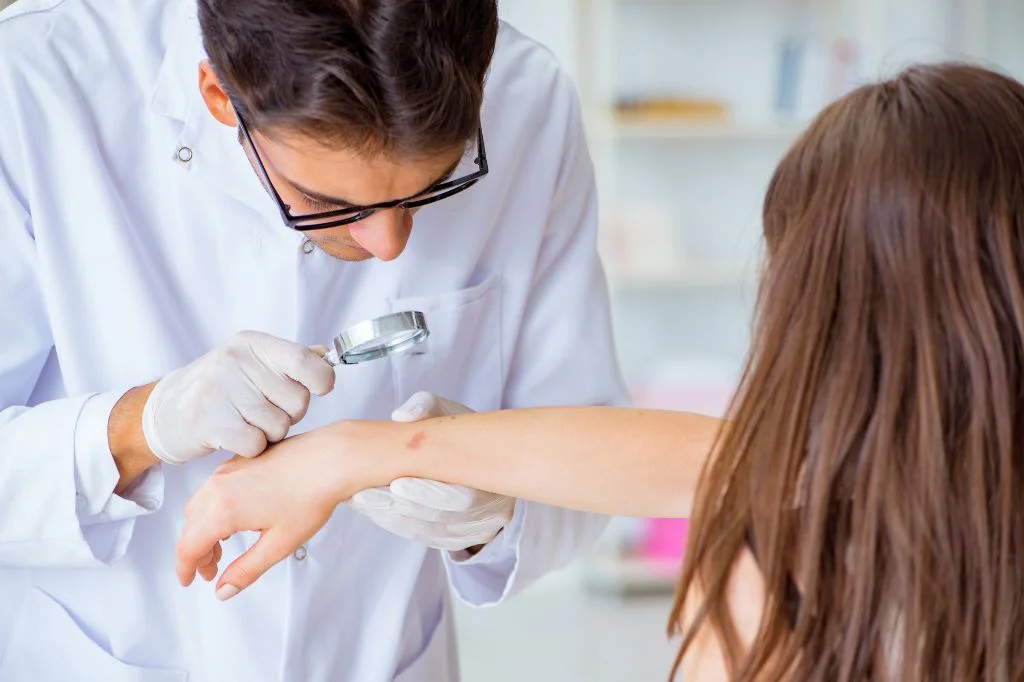
How Hydro Medical Helps
A dermatologist in Bali at Hydro Medical takes a calm, patient approach suited to a nervous child, working through what’s likely going on before recommending anything, rather than guessing from a generic checklist. Other parents have brought their children in for exactly this kind of flare-up before and left with a clear plan and some peace of mind for the rest of the trip. Every consultation is private, and our team is fluent in English, with same-day appointments available across Canggu, Seminyak, and Kuta.
Frequently Asked Questions (FAQ)
What are the most common causes of a child’s rash in Bali?
Heat rash, insect bites, a reaction to a new sunscreen or repellent, and humidity-triggered eczema flare-ups are the most common causes seen in traveling children.
Is heat rash different in kids than in adults?
Children overheat and sweat differently than adults, so heat rash tends to appear faster and more widely, especially on the neck, chest, and skin folds.
When is a child’s rash a medical emergency?
If the rash comes with fever, unusual drowsiness, refusal to drink fluids, rapid spreading, blistering, facial or lip swelling, or difficulty breathing, seek medical care immediately rather than waiting.
Can insect bites cause a rash to spread on kids?
Yes, children can react more visibly to insect bites than adults, sometimes with swelling or a cluster of bites that looks more alarming than it is, though it’s still worth having checked if it spreads quickly.
Is it safe to use antihistamine cream on young children?
Always check with a doctor or pharmacist before applying any medicated cream to a young child, since suitability and dosing differ by age.
Should I stop bathing my child if they have a rash?
No, a cool, gentle rinse is usually soothing. Avoid hot water and harsh soap on the affected area rather than skipping bathing altogether.
Can a new sunscreen or insect repellent cause a reaction in kids?
Yes, children’s skin can react to a product they’ve never used before, especially fragranced or higher-concentration formulas not originally suited for children.
How is a child’s eczema flare-up in Bali different from home?
The heat and humidity can trigger a flare-up even in children whose eczema is normally well controlled at home, so their usual routine may need a temporary adjustment.
Should I bring my child in the same day?
If any of the warning signs above are present, yes. Otherwise, a same-day or next-day opinion is available any time you’d simply like reassurance.
Can Hydro Medical see children as patients?
Yes, our dermatologist sees children as well as adults, with a calm, patient approach suited to younger patients and their parents.
Most children’s rashes in Bali turn out to be simple to manage once you know the cause. Hydro Medical’s dermatologist is available across Canggu, Seminyak, and Kuta for private, same-day consultations. For the warning signs above, please seek emergency care first rather than messaging us.