
You already know chemical peels and microneedling are two of the main options for acne scars, the next question is what a session actually involves, how it feels, how many you’ll need, and what happens afterward. Our dermatologist in Bali walks through both regularly with people at exactly this stage, ready to move forward and just want the practical picture first, not another general overview of what’s out there.
How Chemical Peels Work for Acne Scars
According to the American Academy of Dermatology, a chemical peel encourages the skin to rebuild collagen and elastin, which is what makes depressed scars gradually less noticeable. A few practical details worth knowing before booking:
- Peels range from mild to strong, your dermatologist determines which strength fits your scarring and skin
- Mild and medium peels often need 3 to 5 sessions, spaced roughly 2 to 4 weeks apart
- Pre-peel skin priming is often part of the process, typically for a couple of weeks beforehand
- Sun protection matters both before and after treatment, to avoid discoloration as skin heals
None of this is a one-visit fix, which is worth setting expectations around early. A peel works by encouraging your skin to do the rebuilding itself, gradually, over the course of a full series rather than in a single dramatic session. That gradual pace is actually part of why it works, collagen rebuilds over weeks, not days, no matter how strong the peel is.
How Microneedling Works for Acne Scars
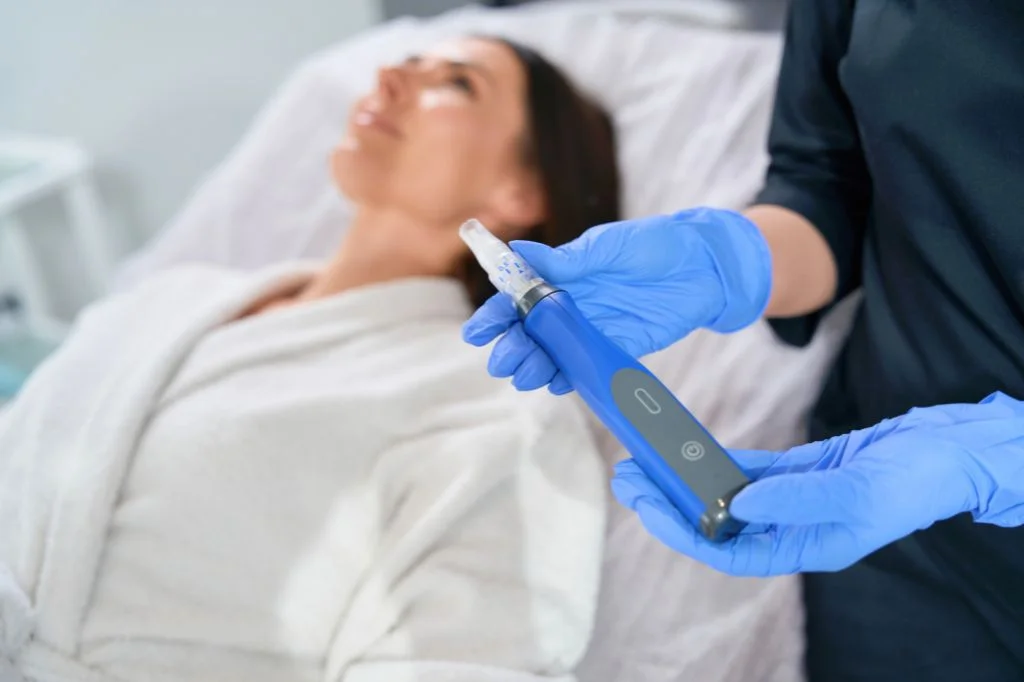
Microneedling works differently. Tiny, controlled punctures trigger the skin’s own collagen production, sometimes called collagen induction therapy, rather than working from the surface down the way a peel does. It’s considered safe for all skin tones, worth knowing since not every scar treatment carries that same reassurance, and your dermatologist can walk you through what applies specifically to your skin during a consultation.
It’s also commonly combined with another treatment, a chemical peel or platelet-rich plasma, for a better result than either approach alone. If you haven’t yet compared this against the full range of scar-treatment options, our acne scars options article covers the broader picture. And if what you’re dealing with isn’t really scarring at all, more of a reactive patch than a fixed mark, our Bali rash overview is worth a look first.
Combining Treatments for Better Results
Dermatologists often combine approaches rather than relying on one method alone, since different techniques address the problem from different angles. A few reasons this matters:
- A peel paired with microneedling tends to outperform either approach alone, especially for more established scarring
- It’s especially relevant for scarring that follows deep, inflamed breakouts like cystic acne, where more tissue damage tends to leave a more noticeable scar to work with
- Which combination actually makes sense depends on your specific scars and how your skin has responded before, something a dermatologist assesses directly rather than guessing from a photo
What to Expect: Downtime, Sensation, and Sessions
Most people describe mild discomfort rather than significant pain, and numbing options are often available depending on what you’re having done. Downtime varies by strength, microneedling tends to involve less recovery time than a stronger peel, and some redness for a day or two afterward is common and expected.
Results build gradually across a series of sessions rather than appearing after a single visit, that’s normal and expected, not a sign something isn’t working. Most people notice meaningful change over weeks to months rather than days, and consistency across the full series tends to matter more than any single session.

How Hydro Medical Helps
At Hydro Medical, an assessment determines which treatment, or combination, actually fits your specific scarring, followed by a session-by-session plan built around that rather than a one-size-fits-all package. If you want the broader picture of what a consultation involves before booking anything, our first consultation article walks through what to expect.
Every consultation is private and unhurried, and our team is fluent in English, across our clinics in Canggu, Seminyak, and Kuta, so nothing gets lost in translation when discussing your specific scarring.
Frequently Asked Questions (FAQ)
What’s the difference between a chemical peel and microneedling?
A peel uses a chemical solution to encourage skin renewal from the surface down, while microneedling uses tiny controlled punctures to trigger collagen production from within. Both aim to improve depressed scars, just through different mechanisms.
Which is better for my type of scarring?
It depends on your specific scars, a dermatologist assesses this during a consultation rather than defaulting to one option for everyone.
Does a chemical peel or microneedling hurt?
Most people describe mild discomfort rather than significant pain, and numbing options are often available depending on the treatment.
How much downtime do I need after treatment?
It varies by treatment strength, microneedling tends to involve less downtime than a stronger chemical peel, your dermatologist can set expectations for your specific plan.
How many sessions will I need?
Mild to medium peels often involve 3 to 5 sessions spaced a few weeks apart, microneedling also typically involves a series of sessions rather than one visit.
Can these treatments be combined?
Yes, combining a peel with microneedling, or either with another treatment, is common and can produce better results than one approach alone.
Are these treatments safe for all skin tones?
Microneedling is considered safe for all skin tones. A dermatologist will advise on the right peel strength and approach for your specific skin.
How soon will I see results?
Results build gradually across a series of sessions rather than appearing after a single visit, most people notice change over weeks to months.
Is there anything I need to do to prepare beforehand?
Some peels involve a pre-treatment skin priming period and sun protection beforehand, your dermatologist will walk you through anything specific to your plan.
Is treatment covered by travel insurance?
This depends on your specific policy. Documentation and invoices are provided so you can file a claim with your insurer if your policy covers it.
Knowing what a session actually involves usually makes the decision easier, not harder. Message us and describe what you’re dealing with, and our team can help you figure out the right next step.