
It’s a symptom that’s impossible to ignore: a sharp, stinging, or burning pain every time you pee. Your first thought is almost certainly, “I have a UTI.” But in a place like Bali, especially if you’ve been sexually active, you cannot assume. That burning sensation is one of the most common STD symptoms, and mistaking it for a UTI is a dangerous gamble that could be a sign of a serious STD.

Why Do a UTI and an STD Feel So Similar?
The reason that the burning sensation from a UTI (Urinary Tract Infection) and an STD (like Chlamydia or Gonorrhea) feels so similar is simple. Authoritative medical sources, like the Mayo Clinic, confirm that both UTIs and STDs are primary causes of painful urination (dysuria). This is because both are infections that cause inflammation in your urethra (the tube you pee from). Your body’s inflammatory response—the “burning” feeling—is the same, whether the cause is bacteria from a UTI or an STD.
The Dangerous Assumption: “It’s Just a UTI”
This is the most critical point. Here’s a scenario that happens every day in Bali.
The Self-Diagnosis Trap
You feel the burn, assume it’s a UTI, and go to an apotek (pharmacy) asking for “UTI antibiotics.” Often, they will sell them to you over the counter.
Why This Fails (The Critical Point)
The antibiotics for a common UTI (like Ciprofloxacin) are not the same drugs used to treat common STDs. An infection like Chlamydia or Gonorrhea requires specific antibiotics (like Azithromycin, Doxycycline, or Ceftriaxone) to be cured.
The Consequence
You take the wrong medication. The burning might fade slightly (or not at all), but the STD infection remains. It can then become silent (asymptomatic), silently causing long-term damage like infertility, all while you unknowingly pass it on to future partners. This is how some of the most common STDs in Bali spread so easily, often mistaken for other issues like a simple UTI or even dismissed like a case of Bali Belly.
A Critical Difference: A Guide for Men vs. Women
While symptoms overlap, the medical probability is very different for men and women.
For Women
UTIs are extremely common in women due to anatomy (a shorter urethra). However, Chlamydia is also incredibly common and often asymptomatic. Because the symptoms are so identical, you should never assume it’s “just a UTI” after a new sexual partner.
For Men
This is the most important distinction: UTIs in men are very rare. If a man is experiencing a burning sensation when peeing, it must be treated as an STD until proven otherwise by a lab test.
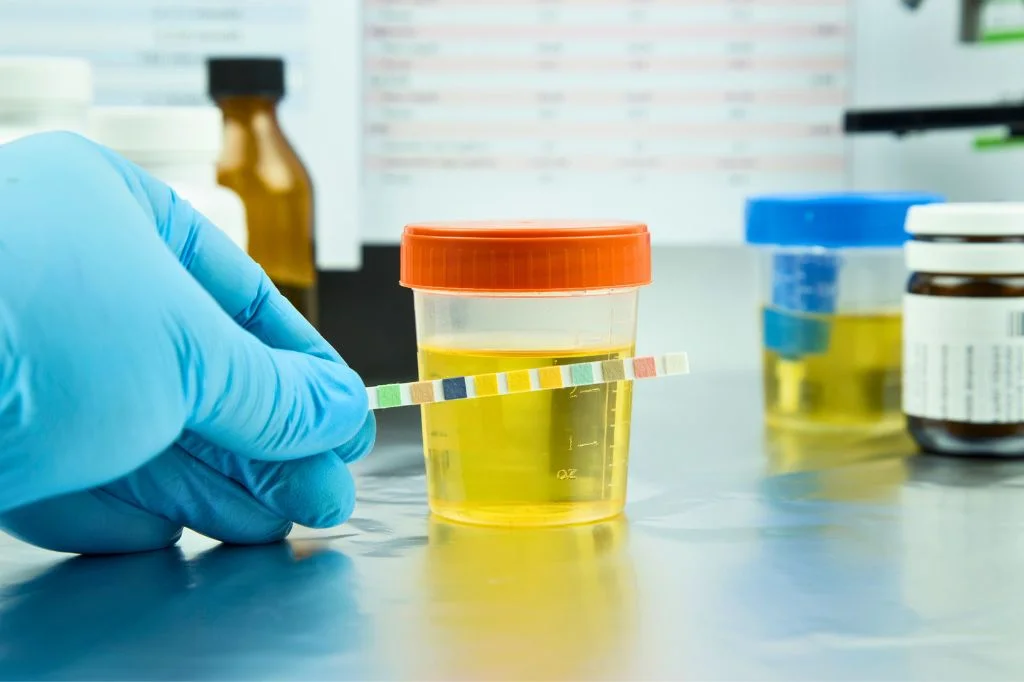
How to Know the Difference: The Only Solution is a Test
You cannot guess and Google cannot tell you the difference. The only way to know for certain is a simple, fast, and conclusive diagnostic test. A good clinic will use a single urine sample to test for both conditions at the same time, which involves two types of tests on that one sample:
- Urinalysis (The UTI Test): This looks for bacteria, white blood cells, and nitrites, which are clear signs of a UTI.
- STD Test (The STD Test): This uses a modern PCR test to look for the specific DNA of Chlamydia and Gonorrhea.
This is why you shouldn’t just ask for a “UTI test”; you should ask for a comprehensive diagnostic test, including a full STD screening, to get a complete and accurate answer.
Conclusion
That burning sensation is a clear warning sign from your body. Don’t guess if it’s a UTI or an STD. The risk of misdiagnosis—and taking the wrong medication—is far too high. The solution is simple: one single urine sample can give you a definitive answer and the correct treatment. Hydro Medical can perform a complete diagnostic test for you today.
DON’T GUESS. GET TESTED.
That burning sensation is a sign. Find out exactly what it is. Our clinic offers fast, confidential testing for both UTIs and STDs from a single urine sample.
Frequently Asked Questions (FAQ)
Can a UTI go away on its own?
A mild UTI might, but an STD like Chlamydia will not. You cannot risk assuming it will just go away.
I took UTI antibiotics from a pharmacy but still feel a slight burn. Why?
This is a major red flag. It likely means you have an STD (like Chlamydia) that was not affected by the UTI medication. You need the correct antibiotics.
Can I have an STD and a UTI at the same time?
Yes, it’s possible. This is exactly why a comprehensive test (Urinalysis + STD panel) is the only safe option.
What’s the test for a UTI vs. an STD?
Both can use a single urine sample. The lab simply runs different tests on it: one to look for bacteria/white blood cells (UTI) and one to look for the DNA of STDs (Chlamydia/Gonorrhea).
I’m a man. Is it really rare for me to get a UTI?
Yes. Due to anatomy, UTIs in men are very uncommon. A burning sensation is a very strong indicator of an STD (urethritis) and you should get tested immediately.
My partner was treated for a UTI. Should I get tested for an STD?
Yes. It is very common for an STD (like asymptomatic Chlamydia) to be misdiagnosed as a UTI in women. Both partners should get tested.
What’s the treatment for Chlamydia/Gonorrhea?
Specific antibiotics (like Azithromycin, Doxycycline, or Ceftriaxone), which are different from standard UTI antibiotics.
How long until the burning stops after I get the right treatment?
After starting the correct antibiotics for an STD, you should feel significant relief within 2-3 days.
I don’t have pain, just a frequent need to pee. Is that a UTI or STD?
It could be either. Both infections can cause “urinary frequency.” The rule is the same: only a test can tell you.
The apotek sold me antibiotics. Should I take them?
No. Get tested first. Taking the wrong drug is dangerous, won’t cure you, and contributes to antibiotic resistance.