
If you’ve read about “Bali breakouts” already, you know the short version: humidity, sunscreen, and diet all change at once when you arrive, and any one of them can trigger acne even in skin that’s never really broken out before.
What that article didn’t have room for is the deeper mechanics behind each trigger, which is exactly what this one covers. Our dermatologist in Bali sees these patterns constantly, and there’s more specific, research-backed detail behind each factor than “humidity causes oil” and “sunscreen clogs pores.”
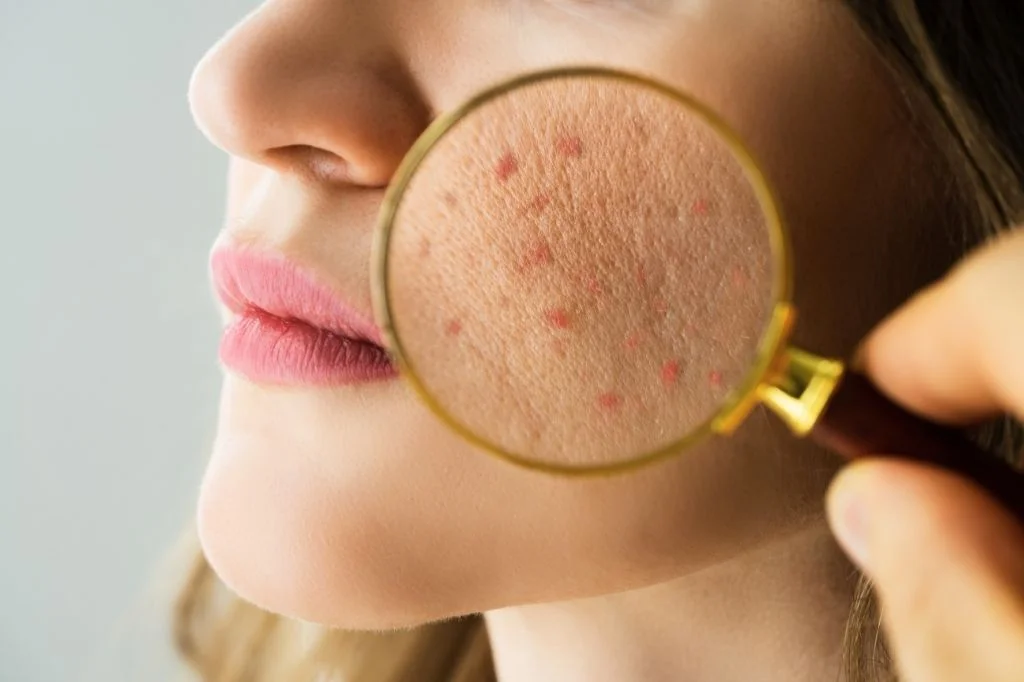
Humidity, Sweat & “Acne Mechanica” (Bali-Specific Friction Triggers)
There’s a specific medical term for one of the most common ways heat and sweat trigger breakouts in Bali: acne mechanica, breakouts caused when heat, sweat, and friction from equipment or clothing rub against your skin. According to the American Academy of Dermatology, it starts as small, rough bumps and can progress to full pimples if the friction isn’t addressed.
- Motorbike helmets: strap and padding rubbing against a sweaty chin and jawline during a daily commute is a textbook trigger
- Backpacks: straps across the shoulders and back cause the same friction over time
- The fix isn’t avoiding the gear, it’s adding clean, soft padding between the equipment and your skin
- Moisture-wicking fabric and regularly cleaning contact points also help
Small, rough bumps specifically at a strap or helmet contact point are a good sign it’s acne mechanica. That’s different from the more general heat rash covered in our Bali rash overview, which tends to appear more broadly across sweat-prone areas rather than at a single friction point.
Reading Sunscreen & Skincare Labels Properly
Bali Breakouts already flagged sunscreen as a common trigger, here’s how to actually do something about it. “Non-comedogenic” means a product is formulated not to clog pores, and “oil-free” means exactly what it says, both are worth checking for specifically rather than assuming any sunscreen is fine as long as it has a high SPF.
Heavier, cream-based sunscreens can feel more occlusive in Bali’s heat and humidity, sitting on the skin rather than absorbing, which is part of why they’re more likely to contribute to breakouts here than in a cooler, drier climate. A gel-based or fluid formula tends to perform better for acne-prone skin in this kind of weather, and reapplying a lighter formula throughout the day is generally easier to stick with than reapplying a heavy one.
What the Research Actually Says About Diet and Acne
Diet and acne is a more debated topic than most people expect, but there’s real research behind parts of it. Several small studies have found that people with acne who switch to a low-glycemic diet (fewer foods and drinks that spike blood sugar quickly, like white bread, sugary drinks, and white rice) see meaningfully fewer breakouts than those who don’t change their diet.
Dairy is a separate, more specific finding: some studies have linked cow’s milk, including skim milk, to more acne, though the same link hasn’t shown up for yogurt or cheese specifically. According to the American Academy of Dermatology, researchers still aren’t certain why milk specifically might be linked while other dairy products aren’t, and the overall body of research is suggestive rather than conclusive.
None of this means avoiding dairy or sugar will clear your skin. It means these are worth paying attention to if you’re trying to identify your own trigger, not universal rules.
How to Identify Which Trigger Is Actually Yours
With three or four possible triggers changing at once, it’s genuinely hard to know which one, or which combination, is actually responsible for your breakout. A more methodical approach helps:
- Change one thing at a time rather than overhauling your sunscreen, cleanser, and diet simultaneously
- Give each change about two weeks before deciding whether it helped
- Keep a simple note of what changed and when new breakouts appeared, even a few lines in your phone is enough
- Pay closer attention to friction points (helmet, backpack, tight clothing) if your breakout follows a specific pattern on your skin
The general self-care checklist, cleanser, sunscreen, and daily habits, is already laid out in Bali breakouts, worth starting there if you haven’t yet. If you’ve adjusted for the likely triggers and it’s still not improving, acne not clearing up is the next step.

How Hydro Medical Helps
If you’ve tried isolating triggers on your own and you’re still not sure what’s behind your breakout, Hydro Medical offers an assessment that can identify likely causes, whether that’s acne mechanica, a dietary pattern, or something else, faster and more reliably than continuing to guess.
Prescription-strength options are available if the breakout needs more than trigger avoidance to clear. Every consultation is private, and our team is fluent in English, across our clinics in Canggu, Seminyak, and Kuta.
Frequently Asked Questions (FAQ)
What is acne mechanica?
Acne mechanica is breakouts caused by heat, sweat, and friction from equipment or clothing rubbing against your skin, common triggers in Bali include motorbike helmet straps and backpack straps.
How do I know if my sunscreen is causing breakouts?
Check the label for “non-comedogenic” or “oil-free”, and consider switching to a gel-based or fluid formula if you’re using a heavier cream in Bali’s heat.
Does diet really affect acne?
Research on this is still developing. Several small studies link low-glycemic diets to fewer breakouts, and some studies link cow’s milk to acne, though this isn’t proof of a direct cause for everyone.
Is dairy definitely linked to acne?
The evidence is mixed. Some studies link cow’s milk, including skim milk, to acne, but no studies have found the same link for yogurt or cheese specifically.
How long should I try eliminating a suspected trigger before judging results?
Give any single change a couple of weeks before deciding whether it helped, changing multiple things at once makes it hard to know what actually worked.
Can a motorbike helmet really cause acne?
Yes, this is a form of acne mechanica caused by heat, sweat, and friction from the chin strap and padding, especially with frequent daily use in Bali’s heat.
What’s the difference between acne mechanica and heat rash?
Acne mechanica appears as small, rough bumps or pimples where equipment or clothing rubs, while heat rash tends to be smaller, more widespread red bumps from blocked sweat glands. If you’re not sure which you have, it’s worth having it looked at.
Should I stop wearing my helmet or backpack if I think it’s causing breakouts?
No, add clean padding between the equipment and your skin, and clean the contact points regularly instead of avoiding necessary gear.
I’ve adjusted my sunscreen, diet, and habits but I’m still breaking out. What now?
That’s a sign it’s worth a professional assessment rather than continuing to guess, since other factors like hormones may be involved.
Can a dermatologist help me figure out my specific trigger?
Yes, an assessment can help distinguish between trigger types and rule out other causes, which is often faster and more reliable than trial and error alone.
Bali acne almost always comes down to some combination of humidity, sunscreen, and diet, and understanding the mechanics behind each one makes it much easier to identify what’s actually happening with your skin.