
Landing in Bali should be the start of a dream holiday, but for many travelers, the descent into Ngurah Rai Airport brings an unwelcome souvenir: ears that simply won’t “pop.” This sensation of being underwater, scientifically known as barotrauma or “Airplane Ear,” usually clears up within a few hours, but when it persists, it can turn painful and disorienting, requiring steps aligned with essential ear health guidelines to prevent permanent damage.
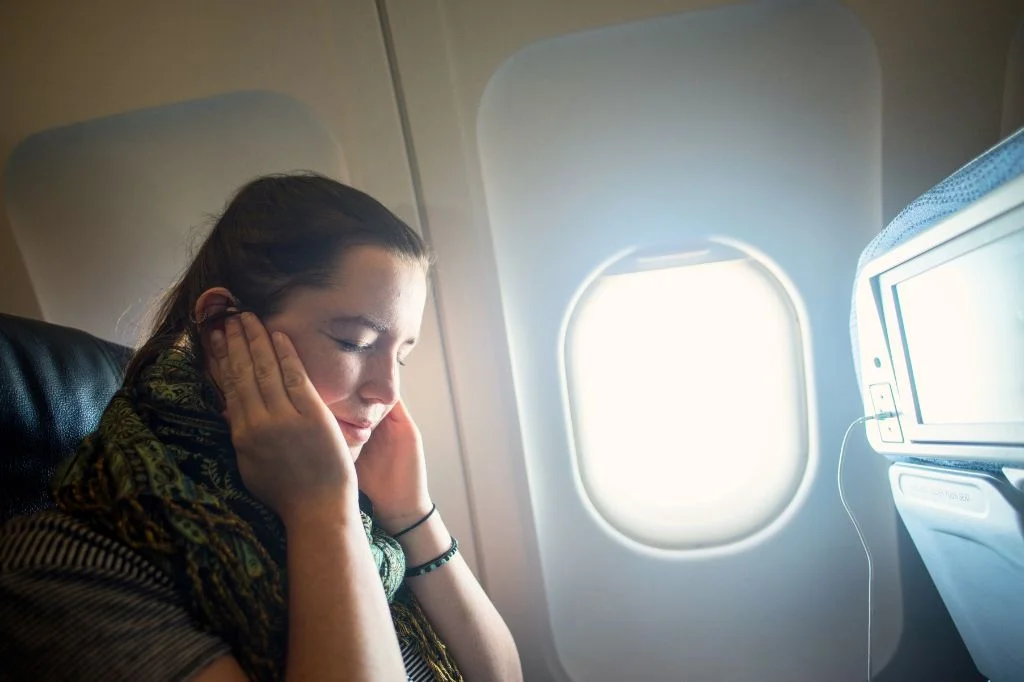
Why Does This Happen? (The Vacuum Effect)
Your middle ear is connected to the back of your nose by the Eustachian tube, which acts like a pressure valve. When a plane descends, the cabin air pressure rises rapidly. If this tube is blocked—perhaps because you are flying with a throat infection or allergy—air cannot rush in to equalize the space.
The result is a vacuum that sucks your eardrum inward, causing pain and muffled hearing. It is important to distinguish this pressure-based issue from a physical blockage like a blocked ear from wax or water, as the treatments are entirely different.
Safe Home Remedies to “Pop” Your Ears
If you have just landed and your ears feel clogged, try these maneuvers to mechanically open the Eustachian tubes. Perform these gently; force can cause damage.
- The Valsalva Maneuver: Pinch your nose, close your mouth, and gently blow air into your nose (as if popping a balloon). Stop immediately if it hurts.
- The Toynbee Maneuver: Pinch your nose and swallow (or drink water). This muscle action pulls the Eustachian tubes open while the pressure changes.
- Jaw Mobilization: Chewing gum or yawning widely activates the muscles around the tubes, often forcing them open.
- Steam Inhalation: If you have arrived at your hotel, a hot shower or inhaling steam from a bowl of hot water can help reduce congestion and open the airways.
What NOT to Do
In your desperation to clear the blockage, avoid these common mistakes that can worsen the injury:
- Don’t force it: Blowing your nose too hard to “clear” the blockage can rupture the eardrum.
- Don’t Scuba Dive: Never dive if your ears haven’t equalized. The pressure underwater is far greater than in a plane and can cause severe trauma.
- Don’t ignore severe pain: If you see blood or fluid draining from the ear, stop all home remedies immediately and seek help.
When to Visit a Doctor (Red Flags)
While annoying, airplane ear usually resolves itself. However, you need medical attention if you experience:
- Fluid Buildup: If the “underwater” feeling lasts more than 24 hours, you may have developed Otitis Media with Effusion (fluid trapped behind the drum).
- Infection Signs: Increasing pain, fever, or yellow discharge suggests the stagnant fluid has become infected.
- Perforation Signs: A sudden, loud “pop” followed by sharp pain and then immediate relief (along with drainage) often indicates a burst eardrum.

Medical Treatments Available at Hydro Medical
If home remedies fail, professional help is needed. During an ENT specialist consultation, our doctors will examine your eardrum using an otoscope to check for retraction, redness, or fluid levels.
Treatment typically involves prescribing medical-grade decongestants (like pseudoephedrine), steroid nasal sprays to reduce inflammation, or antihistamines to chemically open the Eustachian tubes and drain the fluid safely.
Conclusion
While most cases of airplane ear resolve on their own, leaving your ears blocked for days is risky and can ruin your trip. If you have a connecting flight or simply want to enjoy the ocean without pain, visit Hydro Medical for a quick check-up. We can also provide a fit to fly assessment to ensure it is safe for you to board your next plane without risking a ruptured eardrum.
EARS STILL BLOCKED AFTER 24 HOURS?
Don’t risk permanent damage or infection. Get a professional check-up and prescription relief today.
Frequently Asked Questions
How long does airplane ear usually last?
It typically resolves within a few hours after landing. If symptoms persist for more than 24 hours, you should consult a doctor.
Can I go swimming with airplane ear?
It is better to wait. Swimming puts additional pressure on the ear. If your Eustachian tubes are already blocked, water pressure can cause further pain or infection.
Is it dangerous if my ears won’t pop?
Usually, it is just annoying. However, prolonged blockage can lead to fluid accumulation in the middle ear (glue ear) or an ear infection that requires antibiotics.
What is the Valsalva maneuver?
It is a technique where you pinch your nose, close your mouth, and gently blow air as if blowing your nose. This forces air into the Eustachian tubes to equalize pressure.
Can I fly again if my ears are still blocked?
It is risky. Flying again before your ears have recovered can cause severe barotrauma or a ruptured eardrum. Consult a doctor for a “Fit to Fly” assessment if you have a connecting flight.
Do earplugs help prevent airplane ear?
Yes, special “filtered” earplugs (like EarPlanes) are designed to regulate air pressure changes gradually, reducing the stress on your eardrums during takeoff and landing.
Can a cold make airplane ear worse?
Absolutely. Congestion from a cold or allergy swells the Eustachian tubes, making it much harder for them to open and equalize pressure.
What treatment does Hydro Medical offer?
We offer physical examinations to check for damage or fluid, and we can prescribe medical-grade decongestants, nasal sprays, or anti-inflammatories to open the blockage safely.
Why does it hurt more when landing than taking off?
During descent, air pressure increases, pushing the eardrum inward. This “vacuum” effect is physically harder for the Eustachian tube to overcome than the expanding air during takeoff.
Can babies get airplane ear?
Yes, and it is often more painful for them because their Eustachian tubes are smaller. Feeding them (breast or bottle) during landing helps open the tubes through the swallowing motion.