
After learning why sun exposure adds up here, the next natural question is what to actually look for on your own skin. Our dermatologist in Bali gets this question often, not what a mole check is, but what should send you to book one sooner rather than later. That’s exactly what the ABCDE rule is for, a simple framework dermatologists have used for decades to help people describe what they’re seeing in plain, practical terms.
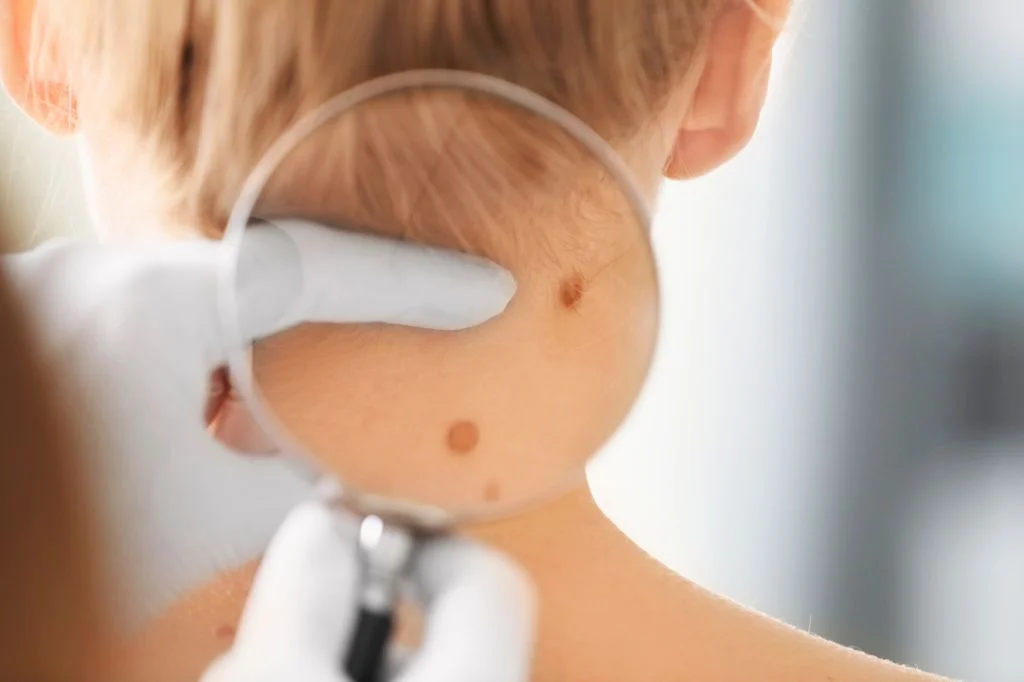
A Simple Framework, Not a Diagnosis
The ABCDE rule is a memory aid dermatologists use to teach people what changes are worth paying attention to, not a way to diagnose skin cancer yourself. Matching one of the five signs doesn’t mean a mole is dangerous, and matching none doesn’t guarantee it’s safe either, it’s a prompt to get something looked at, nothing more, and that distinction matters more than it might seem.
Think of it the way you’d think of a smoke detector, it doesn’t tell you there’s definitely a fire, it just tells you when checking further is worth it, and checking further takes very little effort compared to not checking at all.
The Five Signs, One by One
According to the American Academy of Dermatology, these are the five signs dermatologists specifically train people to watch for:
- Asymmetry: one half of a mole looks different from the other half
- Border: edges that are irregular, scalloped, or poorly defined rather than smooth and even
- Color: uneven color across the mole, shades of tan, brown, or black, or patches of white, red, or blue, rather than one consistent shade
- Diameter: melanomas are usually larger than about 6 millimeters, roughly the size of a pencil eraser, when diagnosed, though they can be smaller
- Evolving: a mole that looks different from your others, or is changing in size, shape, color, or even starting to itch or bleed
Any one of these on its own is reason enough to get a mole looked at, you don’t need to tick every box, and even a spot that simply feels different, itchy or tender without an obvious visual change, is worth mentioning too.
Why This Is Worth Doing Between Visits
Given how much sun exposure adds up here, as covered in our guide to regular mole checks, keeping a casual eye on your own skin between visits is a genuinely useful habit, especially if you’re spending an extended stretch of time in Bali, where the areas most exposed, shoulders, arms, and the back of the neck, are worth a quick glance every so often.
It’s not a replacement for a professional check, dermoscopy sees things a casual glance simply can’t, but it’s a reasonable way to notice if something’s worth bringing forward instead of waiting for your next scheduled visit, particularly for spots in places that are easy to overlook, like your back or scalp.
What to Do If a Mole Matches One of These Signs
If something matches one or more of these signs, the response is the same regardless of how many signs are present:
- Book a professional check rather than waiting to see if it changes further
- Note roughly when you first noticed the change, it’s useful information for your dermatologist
- Take a photo if you can, dated and in good lighting, so any change is easier to track or describe
- Avoid picking at, treating, or trying to remove anything at home
From there, a dermatologist can use dermoscopy to get a proper look, and if a closer assessment like a mole mapping appointment is appropriate, that gets explained clearly before anything happens, at your pace, not on a fixed script.
How Hydro Medical Helps
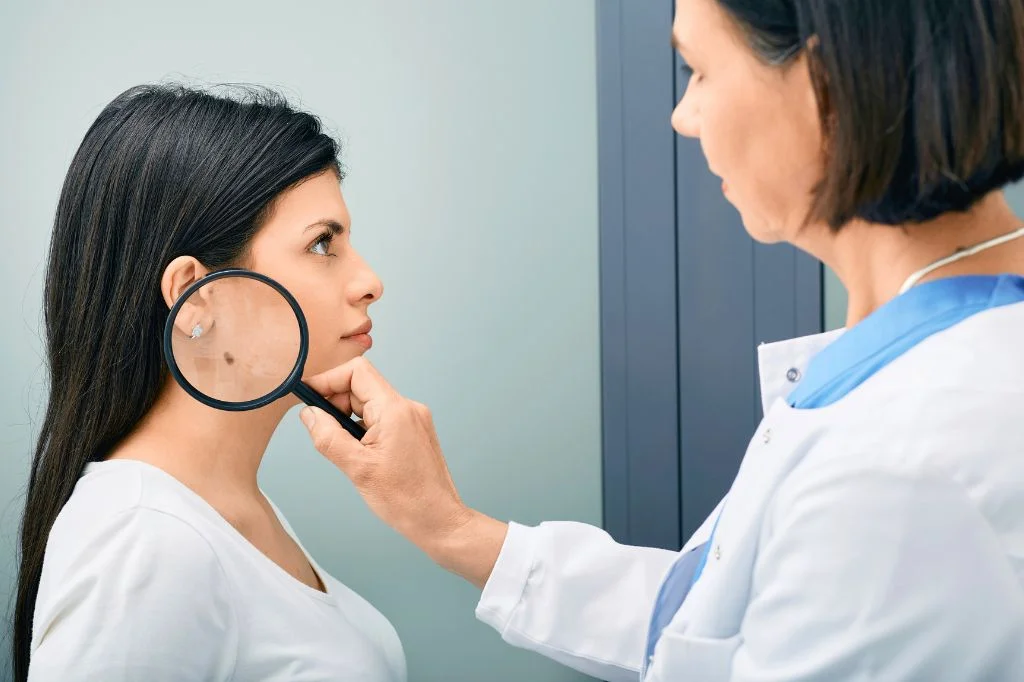
At Hydro Medical, checks are dermoscopy-based, carried out by a dermatologist trained to tell benign moles apart from anything that warrants closer attention. Our English-fluent team sees this across our clinics in Canggu, Seminyak, and Kuta, so nothing gets lost in translation when discussing your specific skin, whether that’s a quick reassurance or a more detailed look.
There’s no pressure and no drama to the process, if something you’ve noticed matches one of these signs, you’ll get a clear, calm assessment and know exactly where things stand, with next steps only if they’re actually needed.
Frequently Asked Questions (FAQ)
Is the ABCDE rule a way to diagnose skin cancer myself?
No, it’s an awareness checklist for deciding when to get something looked at, not a diagnostic tool. Only a dermatologist using proper examination and dermoscopy can assess a mole.
What if a mole doesn’t fit neatly into just one letter?
That’s common, and it doesn’t need to. Any one of the five signs on its own is reason enough to get a mole looked at, and in practice, most concerning moles show more than one sign at once, which makes the checklist even more useful as a quick mental scan.
Can a completely normal mole still meet one of the ABCDE criteria?
Occasionally, yes, which is exactly why the rule is a prompt to get something checked rather than a verdict on its own.
How often should I check my own moles between professional visits?
A casual monthly glance is a reasonable habit for most people, more often if you have a lot of moles or a family history. It doesn’t need to be formal, just consistent.
Should I be worried about every asymmetrical mole?
Not automatically, some ordinary moles are mildly asymmetrical. It’s meant as one signal among several, not a standalone alarm.
What counts as a large mole under the Diameter guideline?
Melanomas are usually larger than about 6 millimeters, roughly the size of a pencil eraser, when diagnosed, though they can be smaller too.
Does the ABCDE rule apply to all skin tones?
Yes, though how changes present can look different depending on skin tone, which is part of why a professional check matters more than self-assessment alone, especially for anyone with darker skin where color changes can be subtler to spot.
What should I do if a mole matches more than one letter?
Treat it the same way as matching just one, book a professional check rather than waiting to see if it changes further.
Is the consultation private?
Yes, every consultation is private.
Knowing what to look for is most of the battle, the rest is just booking the check. Message us and our team can help you book a mole check that fits your schedule.